Friday, August 26, 2022

A Needed Boat Ride

     I have been really craving a whale watch, and I have gone on many, I've been in Cape Cod and was blown away by seeing 3 species, I have been from Boston in the stormiest worst weather, watching fin whales frolic carelessly through the waves, I remember my first, as a kid in the 3rd grade, nerding out on the boat, knowing the answers to all the naturalists' questions and freaking out seeing Minkie whales and Atlantic white-sided dolphins. Needless to say, I have always loved cetaceans. And whenever I see them, it makes me feel child-like in excitement to share a place with them.

    Yesterday, I went aboard the American Princess with Gotham Whale, and you know what they say, 4th time's the charm (I've been 3 times, with no whales). In less than an hours time, two whales were swimming and diving in the waters around the boat. I had chills seeing these animals up against the skyline that is not only familiar to me as a huge city, but also my home. And no less than maybe 5 or so miles from my actual home, in the waters that I swim in, spy birds in, and play sanderling in with my daughter (running away and to the waves like a sanderling), here were the animals that just strike my with so much awe and remind me of why I do what I do with my career, with how I raise my kiddo, and how I generally navigate the world and ensuring it is one filled with wildlife.

If you want to hear unfiltered joy, the gasps and squeals from a whale watch is it.
A humpback whale which can easily reach around 45 or so feet in length swims barely more than 2 or 3 miles offshore in waters that are maybe 30 or so feet deep in our NY Bight.
Named for the hump before their little dorsal fin, these whales are distinguished by their large pectoral fins, which you can see, glowing white underwater.

Humpback whales are also known for their unique fluke patterns. Like a fingerprint, each is unique and for people, researchers "know" each whale by their fluke pattern and have followed many of them for years, even decades!

Here a humpback is lunge feeding, just maybe 5 or 6 miles from where I live.... I live about 4 miles up the road from that bridge there... THIS IS NYC'S BACKYARD!!!!

You can even sneak a peek at that baleen!
These whales use their baleen plates live a sieve, fish get caught and water can be pushed out. The baleen is made of keratin, same stuff as your fingernails.

Humpbacks here are feeding happily upon the now plentiful Atlantic Menhaden, or Bunker. a fish that has become plentiful with cleaner waters and restrictions on how people utilize our natural resources. These fish are fatty and helpful for building up their blubber before they migrate south where they often forgo eating.

With Riis Beach at Gateway National Recreation Area right behind it. When you go to the beach you are swimming with whales!!!!
And sharks, other fish, invertebrates galore, birds, sea turtles, there is so much wildlife below the surface!

A more intimate look at this animal shows the characteristic two-nostril blowhole or all baleen whales, but further up its head, what looks like a propeller scar.
Boats are these large animals' biggest threats. People think they can get close as whales are often poised as gentle giants -- and many are. But Our boats can cause serious injuries and death to these large animals.
But not only are big boats an issue, but small things, like plastics are also a threat to these creatures, causing entanglement, ingestion, and other injury. From the boat, debris was evident in the water, change is needed from more than just us and our individual actions.

Sometimes a fluke would break the surface, signaling the whale was taking a deeper dive below. 

How fortunate are we to have these animals here in New York City?!

Before heading home, we found another humpback associating with a decently sized group of bottlenose dolphins who looked to be of all ages, young and old! We even saw a few leap fully out of the water, a spectacular sight!

    So before I start my new job in the next week and a half, being on a boat full of people with differing views and opinions but clearly connected and invested in whales gives me hope and motivation to get started. Reminding me how so many people are ready to have their eyes opened to the wilderness in our waters, our air, and in the tiniest green spaces by way of a street tree. Because it was awesome to hear people exclaiming how they are amazed at the wildlife here and their ability to witness it. That is the kind of fuel I thrive on and I love bringing people along with me to explore it.

Before the season is up, check out whales with Gotham Whale and American Princess Cruises! Otherwise, join them to see some pinnipeds in the spring!

Tuesday, August 23, 2022

August Birding

     Birding can be what you make of it, there is always something going on. You can get in on the action or take it easy. Lately, I have not let racking up numbers and species get to me, but I do get very excited at the opportunity to add a bird to my year list. 

    The piping plovers have been fledging and moving and a lot of the plover patrol has tapered off, so I have been looking t birds other than plovers. As the plovers are on the move, so are many other shorebirds, so I have indulged in them a bit, but also have taken it slow, getting under some shade trees and waving hello to a catbird or nine. A wrap up of a few locations: Tilden, Jamaica Bay, Canarsie Park, and Green-Wood Cemetery.

In watching plovers all summer, I got to also spend some quality time with other birds who called the shore home either for a few weeks or temporarily as they migrated through, like these ruddy turnstones.

And they are just these beautiful mosaics of bold colors, I love 'em!

Toward the end of plover season the sanderling numbers really increased dramatically. These high Artic breeders have been heading south since early August!

I learned this summer skimmers can predate upon plover chicks. They also breed on the Rockaway Peninsula like the plovers. They are incredibly mesmerizing to watch. 


This mature and very good looking lesser black-backed gull spent a good chunk of the summer on the stretch of beach I spent most of my time. It's a gorgeous bird.

*swoon*
Adults are the easiest to tell apart:
1. size, they are somewhere between ring-billed to herring gull size.
2. Head shape, is more round, less blocky than a great black-back.
3. Legs, those yellow legs set them apart from all the others.

On August 13th I co-led a shorebird walk at the Shore Bird Festival at Jamaica Bay Wildlife Refuge for the Feminist Bird Club.
It was really awesome, because shorebirds are hard and we helped some folks see the intricacies that set them apart from one another.
We saw a lot of these, lesser yelowlegs, which are very cute.

This was a treat, one of two pectoral sandpipers. With their yellow-orange legs, orange bill base, and larger size, these birds are one of the easier ones to pick out of a crowd of semipalmated sandpipers.

I really enjoy seeing these, as you have to work hard to see them and sift through other birds. So in a way, it's rewarding!

Caught mid- scritch, this one looks very cute.

One that is a touch harder to find in your sifting are these, two white-rumped sandpipers. The bird on the right is giving an exclusive peek to that white rump this is often hard to see!

Compared to the semipalmated, they are just a touch bigger, I originally found them because they felt so big in comparison to the birds are them. They also have a very strong eyebrow, and I admit, this photo doesn't show it very well, but their wings are longer than those of the semipalmated, reaching (just a touch) past their tail.

Then another stand out from the crowd.

This bird was just a touch smaller than the lesser yellowlegs, a more dainty head and bill, but a deep chest, like a boat. And normally this bird is like a boat, as they typically swim to get their food. But this one was running, and we were so glad to see this Wilson's Phalarope!

Got to see a number of birds on this walk that were show stoppers, very exciting to share my very amateur shorebird knowledge with folks. 

In my visit to Canarsie Park, this little one really delighted me. It's a fledged brown-headed cowbird and it was not shy. Which I suppose is an important factor in being a cowbird.
It's damn cute.

Even I would let this little bird infiltrate my life and raise it as my own, being that cute.


I was very excited that my first steps into Green-Wood Cemetery last week revealed an entire mob on Italian wall lizards! I am excited to go back and see more.

The Dell Water was very low, and this great blue heron was plucking tadpoles from the water like small snacks.

A very lovely black swallowtail finding the thistle to be perfection.

Lots of black swallowtails out on this day.

Got to see one of my favorites having a bad feather day. It is not that crazy to see some songbirds with a more catastrophic molt on their heads, as this brown thrasher is demonstrating.

I don't mind the funny feathers, still love these gorgeous rich, brown birds.

I thought this was my special treat before heading out, a lone immature drake wood duck on Sylvan water.

He was hanging about with a gang of Canada Geese, good pals if you want some protection!

But silly me, the treat was yet to come, a flowering shrub filled with a family of eastern kingbirds, a scarlet tanager, and a yellow warbler! I love the kingbirds and was hoping to see them, nearly sad to have not seen them in my walk thus far, so getting to see them right before my exit was extra special!


Monday, August 8, 2022

Birdday

     It's my birthday, and as per usual it was spent with birds. I was out with NYC Plover Project ensuring the closed portion of beach for our one and only fledgling from Ft. Tilden could thrive in peace, without threats from people. Here is that little nipper in it's full fledge glory, in photos I took last week:

Even little shorebirds need a drink in this crazy heat!
(note the tongue!) This fledgling is still a bit fuzzy around the edges, but really has those grown-up bird feathers for flight coming in.

Piping plover have very sweet faces, mournful calls, and even when they are at that in-between stage of chick and juvenile, they are still quite darling.

Soon those little wings will carry them off to their winter home.

    This weekend I did have the change to some, what I call, speed birding. I went to the East Pond hoping to see an American Avocet as the other headliners were seen the week prior. And perhaps a little birthday luck was on my side, for when I entered the Northeast corner of the pond, right before my eyes were two American Avocets.

double vision?
I think not.
American Avocets.


I am so beyond fascinated by these birds, they are robust, yet delicate, that bill blows my mind. It seems so fragile.

But by sweeping the bill back and forth in the water, they find yummy things to eat, typically, invertebrates are their faves.

Speaking of... looks to have scored some kind of worm?

I have seen these birds before but in their non-breeding plumage so getting to see those peachy heads,  that was a treat!


While I saw the two Hudsonian Godwits last week, this week I got a closer look from the NE corner. The sun was not in my favor, but that's okay.

Another wonderful rare visitor - I'm so excited for what migration has to bring!

I used my Phone Skope to grab some video of these birds, I love the A train passing through at the end, coinciding with a dowitcher chugging along behind the godwit. 


Sunday, July 31, 2022

This Was July (the non-plover part)

     July has been a lot. I have devoted much of my week to chick-sitting for NYC Plover Project but I have been able to do a tiny bit of birding when it was not triple digit temperatures out there. 

    The heat put a damper on any urge I had to go birding, especially in sitting on the beach most of the week. And of course some wonderful birds have been starting to migrate through, including some that would be lifers. I just hoped that they would stick out the week so I could see them without having to torture myself in the heat. And with luck on my side, they did!

Summer can be slow, so I sat around watching this great egret capture fish at high tide between the marsh grasses at Marine Park earlier this month.

It ate a lot of these, I wonder how many it needs in order to be satisfied.

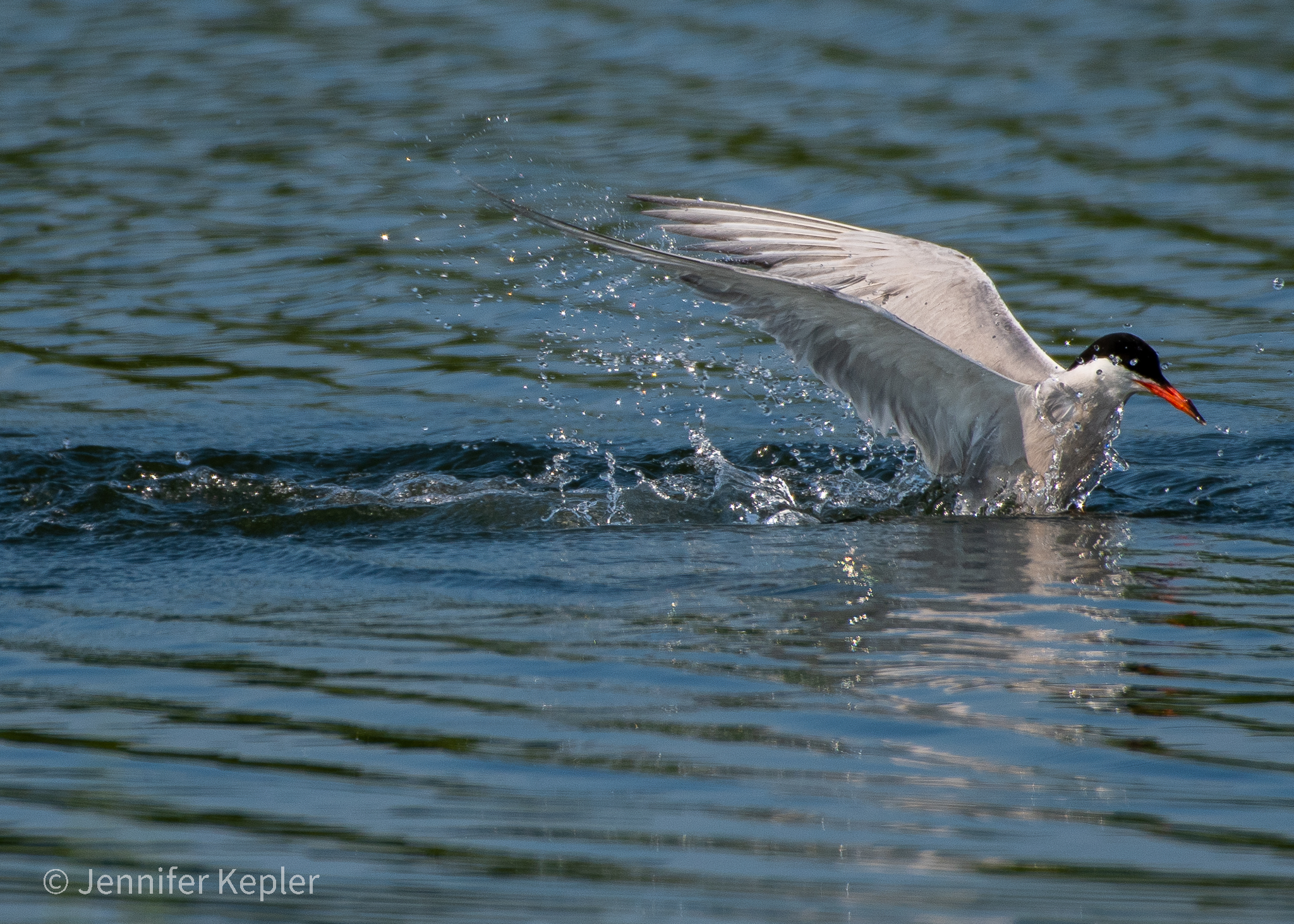
I also tried capturing the Forster's terns as they hunted and dove into the waters.
Post dive you have to shake off all that excess water.

One of the resident osprey. Both nests have chicks this year, it's very exciting.

No luck on this dunk, fishless.

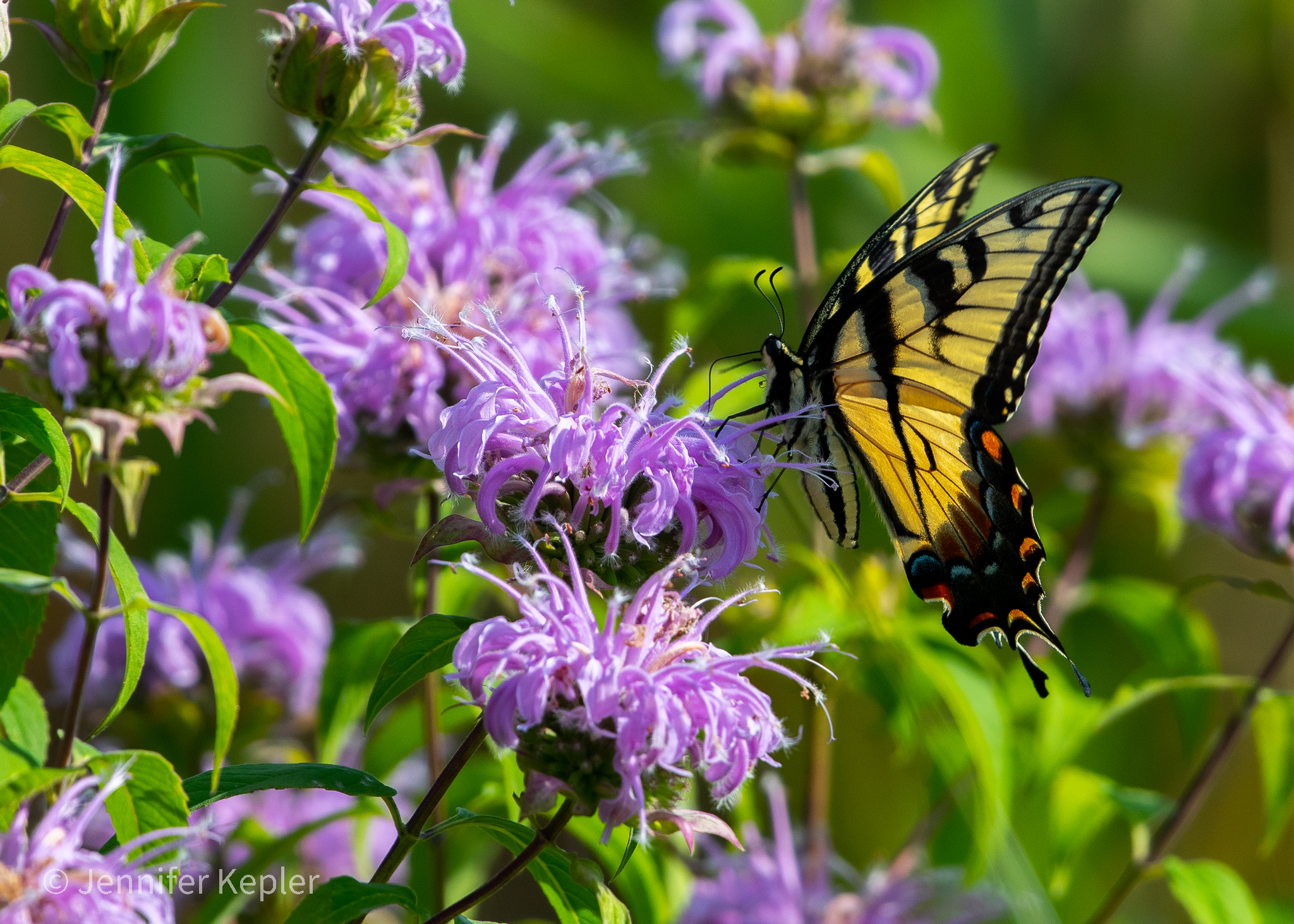
An Eastern Tiger Swallowtail on what I am fairly sure is beebalm. 
When it's summer the butterfly and moth show is always there to impress.

I also got the chance to visit Jamaica Bay's East Pond. Happily thanks to the work of a committed volunteer, I was able with friends to traverse all the way to its northern most points and got to see a life bird, two Hudsonian Godwits, Of which I got no pictures of, they were at a distance, but I was very happy to see them.
What did put on a spectacular and very entertaining show were the Forster Terns (pictured) with their fledglings who were whining to their parents, begging for food, and all too familiar to myself.

This female boat-tailed grackle was destroying this very big grapevine beetle. I thought at first it was a crab, as it was decently large enough.

The fledgling terns practicing their diving. Over, and over, and over, and over again. Comically dipping themselves just as soon as they came back up, father than hovering to determine their next target. It was pretty fun to watch.

And then, after watching their parents, they'd fly after them to beg for the fish they came up with.
I really loved the adult tern that came up with a fish with their whining fledgling in tow.... and just guiltlessly gulped down the fish for themselves. I was happy for them, because I know that feeling and that desire to eat that last delicious bite from your plate rather than selflessly sharing it to your offspring who has already eaten the majority of your dinner over their own.
Been there.

One of the major contributors to the soundtrack of yesterday's adventure were the short-billed dowitchers. There were lots of them and I was very excited to be able to pick out a long billed among them. It helped that it was so super red and chonky, it really stood out as different from the short-billeds.

At first was very confused by what seemed to be fully yellow legs, but the black on it's front of legs and the yellow face makes this a juvenile snowy egret.

In addition to the dowitcher section of the symphony, the other major contributor to the soundtrack of yesterday were the lesser-yellowlegs. Don't let that name fool you, they are very great, indeed.
Felt pretty fortunate to bird from 8am till nearly 12:30pm with some friends on a delightfully breezy day where the bugs were kept at bay, it wasn't 100 degrees, the pond was VERY walkable, and we got a bunch of the things we all secretly hoped for: Hudsonian Godwit, Bonaparte's Gull, Black-headed Gull, and Long-billed Dowitcher.

If you do plan to traverse the East Pond at Jamaica Bay WR, I highly suggest understanding how/where/names of the place. This map from Birding Dude, Andrew Baksh will be of great help to you.